Self-production, integration of sources and recovery of energy flows: a direction that is redefining the farm and the role of machinery within it.
The agriculture and forestry sector accounted for around 3% of the EU’s total direct energy consumption in 2023. This share was similar to that recorded in 2021 and 2022. Energy is consumed directly in agriculture and forestry through the use of machinery, for heating/cooling stable and greenhouses, or for production processes. In 2023, oil and petroleum products (excluding biofuels) accounted for the largest share (58.3%) of direct energy consumption in the agriculture and forestry sector in the EU. This is a significantly higher share than that recorded for the economy as a whole (37.4%). Although oil and petroleum products remain the dominant fuel in the sector in most EU countries, different energy patterns can be observed. For example: natural gas plays a particularly significant role in the Netherlands, where it accounted for just over half (51.6%) of the sector’s direct energy consumption in 2023. Electricity, on the other hand, is the main form of energy used in Greece, where it accounts for almost two-thirds (65.4%) of the total in 2023. Renewable sources and biofuels also constitute an important component of the energy mix in several countries. In Sweden and Austria, they account for over 30% of the sector’s direct energy consumption, while in the Czech Republic, Finland, Germany, Latvia, Slovakia, and Lithuania, they exceed 15%.
In Italy, the energy mix in agriculture confirms a heavy reliance on petroleum products, which account for the vast majority of direct consumption. Electricity is playing an increasingly important but still secondary role, while renewable sources remain marginal in terms of consumption, despite their potential for production.
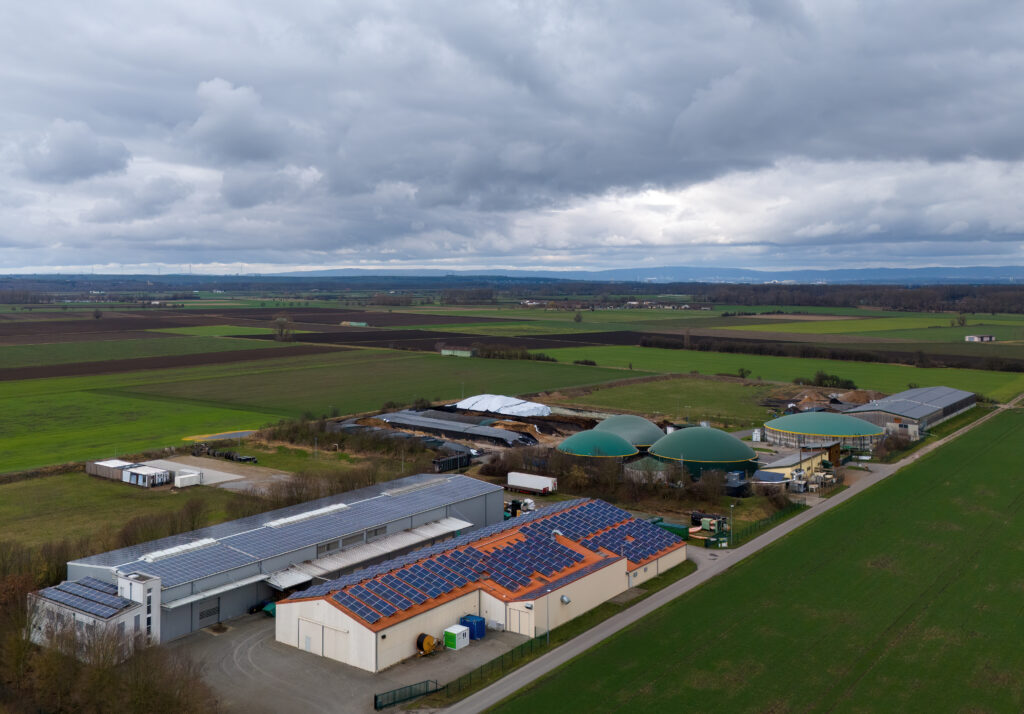
Rethinking the Farm
While at the macroeconomic level the 3% share represents a relatively small proportion of total energy consumption, at the company level energy can have a significant impact on operating costs, in some cases accounting for one of the main items of expenditure. It is precisely this gap between macroeconomic impact and microeconomic impact that is driving renewed attention to the issue. This new focus is 1) on greater energy efficiency, 2) on increasing the sconsumption of self-produced renewable energy, and 3) on optimising the integration of energy flows at the farm level. In this context, the view of the farm is changing: no longer as a mere consumer of energy, often with limited scope for action beyond cost containment, but as an integrated energy system, capable not only of consuming, but also of producing, transforming and managing energy. This new vision of the farm and its relationship with energy is one of the key areas on which some of the most recent European research projects, some recently concluded, others still ongoing, are focusing. One of the most striking aspects that emerges is the attempt to move beyond a fragmented approach to energy in agriculture. It is no longer a matter of focusing on individual plants, but of rethinking the farm as a network of interconnected energy flows. The emerging direction concerns not only self-production or the integration of energy sources, but also the recovery and utilisation of energy flows within the farm , starting with those that are currently wasted.
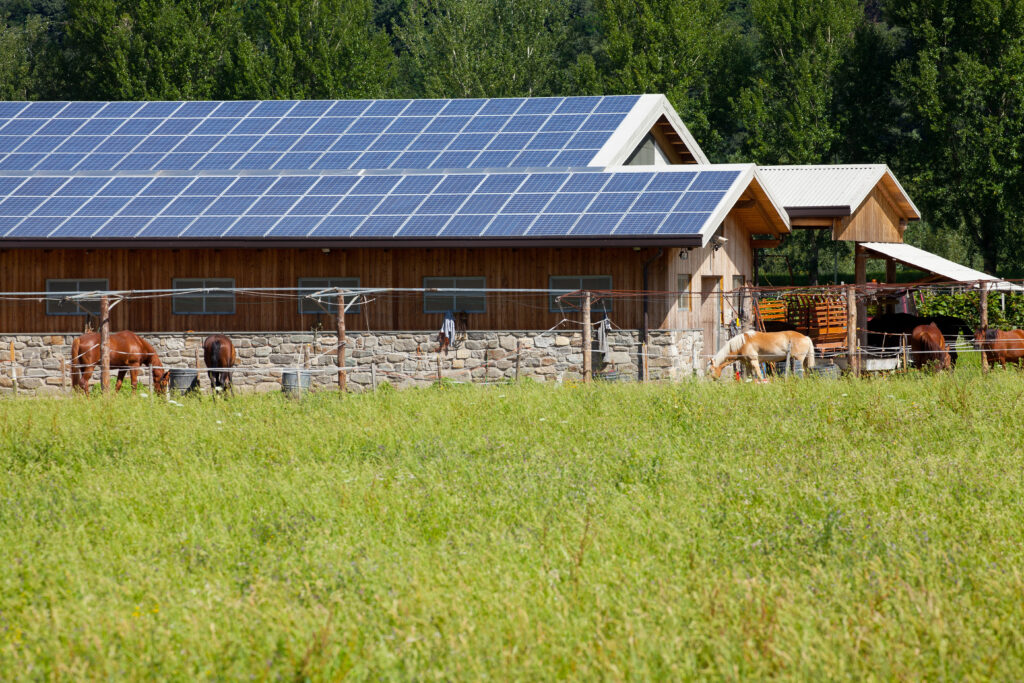
The Farm as an Integrated Energy System
If we examine the energy flows on a farm, a complex, varied and often poorly coordinated structure emerges, yet one with interesting potential for integration. Among the projects addressing this issue, we would mention Value4Farm, whose aim is to build a system in which:
- the energy produced (for example, from biogas or solar panels) is used directly in the company’s operations
- agricultural by-products become energy resources
- energy uses are coordinated to reduce waste and inefficiencies
In this setup, the farm moves towards a model in which agricultural production and energy are no longer separate spheres, but components of the same system. Another interesting development in this direction comes from the recently concluded European HyPErFarm project, which explored the possibility of transforming the farm into an integrated energy system, combining production from renewable sources, direct energy use and, in the future, storage systems and alternative energy carriers. The focus is not on a single technology, but on integration: agrivoltaics for electricity generation, process electrification, biomass utilisation and energy use within the production cycle. This is not yet a model that can be fully applied on a large scale, mainly due to its complexity and the inclusion of certain technologies that are not yet mature (hydrogen). However, the project highlights a key shift: in agriculture, energy is no longer merely a cost factor, but a design variable that can be managed and integrated within the farm.
The Crux of the Matter: Why the Model isn’t Catching on
Most of the technologies proposed in the projects mentioned are already available, but the uptake of integrated systems remains limited. This is precisely the focus of the AGRISOL project, which analysing the factors that hinder their adoption. The aim is clear: to understand why existing solutions, such as agrivoltaics or on-farm energy integration, are struggling to gain traction.
The critical issues identified are not primarily technical. Rather, they concern:
- the operational complexity involved in integrating new systems with existing agricultural activities
- the difficulty in defining clear economic models
- the lack of a coherent regulatory framework
- the uncertainties related to the dayly management of the facilities
- CAPEX, OPEX, ROI
This shift in perspective is significant: the limitation does not lie in the absence of solutions, but in the ability to integrate them effectively into the business system.
Energy and the Economic Model
Energy integration on a farm is not economically neutral. It requires investment, alters cost flows and introduces new variables into management.
However, European projects show that the issue is not simply the economic return on a single technology, but the overall balance of the system. Energy produced on the farm can reduce exposure to market prices, but only if it is used consistently with requirements. Similarly, energy recovery within processes can reduce operating costs, but requires integrated design.
Scenarios
Projects such as those mentioned do not describe an established model, but rather a futuristic scenario in transition. Their novelty lies not so much in the technologies proposed, but in the way the issue of energy in agriculture is approached. On the one hand, they demonstrate that the integration of agriculture and energy is technically possible. On the other, they highlight just how complex it is to translate this possibility into widespread practice. The result is a situation in which the potential is clear, but implementation remains incomplete; yet, it is on this integration that the evolution of the agricultural production model hinges today: the point is not so much to adopt new technologies, but to build a coherent system in which agricultural production and energy support each another. In this context, the issue of energy no longer concerns merely how much is consumed, but how energy is organised within the farm.
Implications for agricultural machinery
The vision of a farm as an integrated energy system also directly affects machinery manufacturers and users. A model based on the integration of energy flows implies, in fact, a transformation of the very role of machinery within the farm. Firstly, there is a need for the gradual electrification of processes and, in the long term, of agricultural machinery, or the use of alternative energy sources such as biogas and biomethane produced on-site. This opens up the possibility of recharging or refuelling machinery directly on the farm, for example by utilising local energy production or overnight hours, with direct effects on operational management and costs.
At the same time, the growing prevalence of self-generated energy — which is often the most cost-effective way to use energy — requires closer coordination between energy availability and machinery usage. Activities are no longer driven solely by agronomic or operational needs, but also by the availability and cost of energy at a given time.
In this context, agricultural machinery is no longer a standalone component, but an integral part of the farm system. If the future lies in energy-integrated farms, the design, use, and management of machinery must also take this into account. The efficiency of individual machines remains important, but it is no longer enough: what matters is their ability to fit seamlessly into the farm’s energy flows.
Maria Luisa Doldi